Interested in this project?
I'm happy to discuss the team dynamics, backend architecture, or tech stack decisions.
Get In Touch
Loading
XpanSieve Solutions is a digital agency and product studio focused on building practical software systems, web applications, and technical solutions.

A full-stack library management system built as a school group project within a 6-week deadline. The system handles book cataloging, borrowing/return workflows, user management, and reporting — all the core operations a small-to-medium university library needs to function digitally.
As the lead developer on the team, I focused primarily on the backend architecture — database design, business logic, and API structure — while coordinating with teammates who handled the frontend interface and testing.
The technology stack was a deliberate choice, not a default. With a 6-week timeline and a team of varying skill levels, we needed technologies that were:
Fast to develop with: PHP with MySQL has minimal setup overhead — no complex build tools, no framework learning curve. Every team member could start contributing immediately.
Well-documented: For a team where not everyone had the same level of experience, having abundant documentation and community resources reduced the risk of blockers.
Sufficient for the scope: The system didn't need real-time updates, complex state management, or high concurrency. PHP/MySQL was more than adequate for handling CRUD operations and session-based authentication.
My primary responsibilities as lead dev and backend owner:
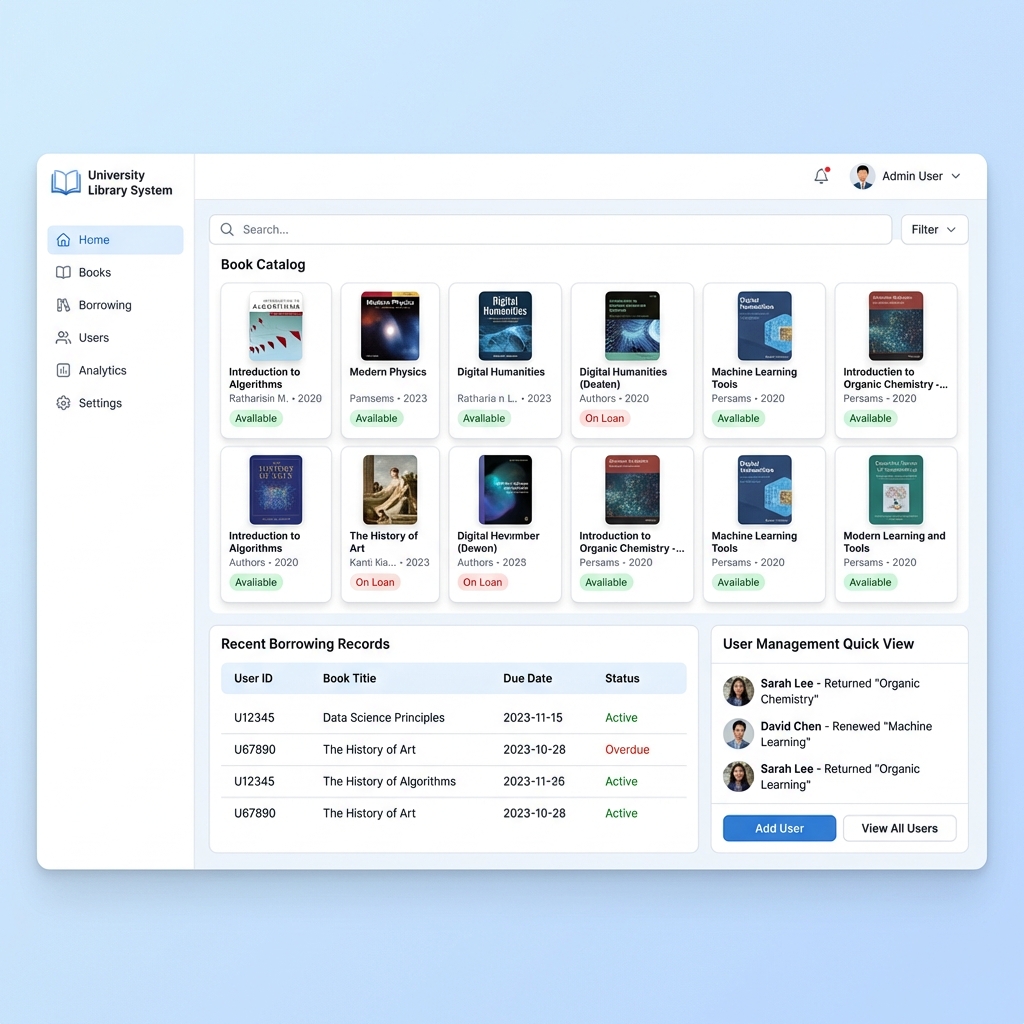
Designed the database schema (normalized to 3NF), built the authentication system with role-based access (admin, librarian, student), implemented the borrowing workflow with due date tracking and overdue notifications.
Leading a team project taught me as much about communication and project management as it did about code. Key lessons:
Scope management is everything: With 6 weeks, we had to aggressively cut features to ship on time. We dropped planned features like fine calculation and email notifications to focus on the core borrowing workflow.
Code review matters even in small teams: We caught multiple bugs in the borrowing logic through peer review that would have been embarrassing in the demo.
Documentation prevents confusion: Writing a brief API guide for the frontend team eliminated 80% of the "how do I call this?" questions.
This was an academic project — it was completed, demonstrated, and submitted as part of our coursework. The system works end-to-end: administrators can manage the book catalog, students can search and request books, librarians can process borrows and returns, and the reporting module generates usage statistics.
The project is not publicly deployed as it was built for academic purposes. It represents a strong exercise in team-based full-stack development under time pressure.