

- Jonathan Samuel
- Jan 15, 2026
- Software Engineering
Why Simple Systems Fail in Predictable Ways
Every developer has been there. You build something small, something straightforward, and it works perfectly in your testing environment. Then you deploy it, and suddenly edge cases crawl out of every corner. The truth is, simple systems do not fail randomly. They fail in patterns that, once recognized, can be anticipated and designed around.
When I first started building applications, I treated errors as anomalies. Something went wrong? Fix it and move on. But over time, I started to notice that the same kinds of failures showed up across entirely different projects. A form that breaks when someone uses an apostrophe in their name. A timer that drifts when the user switches tabs. A database query that returns duplicates because nobody accounted for concurrent writes. These are not exotic bugs; they are predictable consequences of overlooking the gap between your assumptions and reality.
The question is not whether a simple system will fail, but whether you have built the awareness to anticipate where and how. Recognizing these patterns early transforms reactive debugging into proactive engineering.
The most valuable lesson I have learned in software engineering is that systems do not fail because of complexity. They fail because of unexamined simplicity. The parts you skip thinking about are the parts that break first.
The Pattern of Predictable Failures
In my experience building projects like the Offline CBT System and the BLE Attendance Tracker, I have identified three categories of predictable failure:
1. State assumptions. You assume the application will always start in a clean state, but users close tabs, lose connections, and resume sessions hours later. In the CBT system, I had to handle the scenario where a student loses power mid exam. The system needed to save progress locally and reconcile when connectivity returned.
2. Boundary conditions. You test with 10 records, but production has 10,000. The timetable generator taught me this lesson the hard way. An algorithm that ran in seconds with 50 courses took minutes with 200 because the constraint solver was exploring an exponential search space.
3. Silent data corruption. The most insidious failures are the ones where the system does not crash but produces subtly wrong results. In the library system, a race condition meant that two students could check out the same book if they clicked at nearly the same time.

Building With Failure in Mind
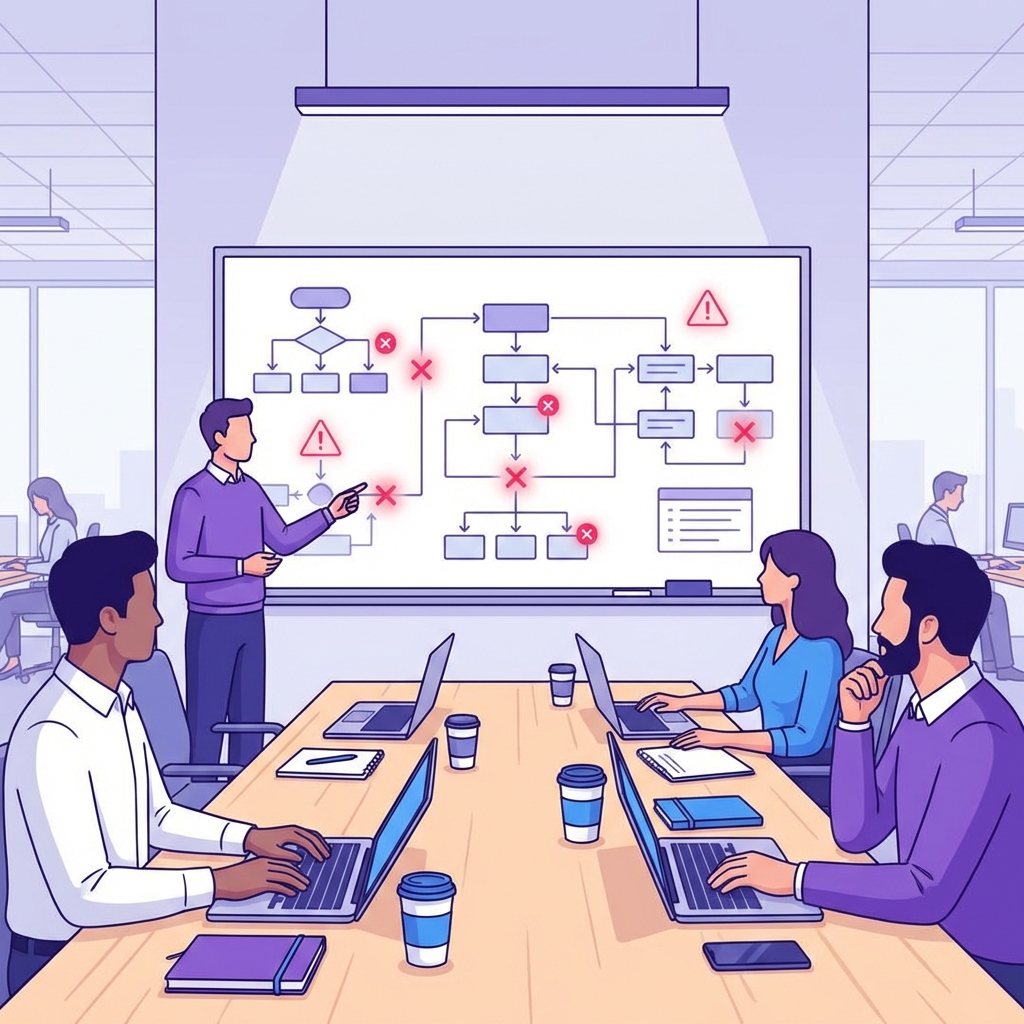
The shift in mindset is simple but powerful: instead of asking "will this work?" ask "how will this fail?" For every feature, I now keep a short list of assumptions I am making and then deliberately test what happens when each one is violated.
This is not pessimism; it is engineering discipline. And it is the difference between a system that works in a demo and a system that holds up in the real world. If you are just starting out, build something small, deploy it, let real users touch it, and watch how it breaks. That feedback loop will teach you more than any textbook ever could. The best engineers I have met are not the ones who write the most clever code; they are the ones who have internalized where systems break and build accordingly from the start.